An installation and film investigating whether consciousness is produced by the body or received from beyond it.
RIPPLES IN MERCURY (2026)
01
MANAN GOYAL
An installation and film investigating whether consciousness is produced by the body or received from beyond it.
CONCEPT, DIRECTION, 3D ARTISTRY
BY MANAN GOYAL



DIRECTOR'S STATEMENT
The body is the mercury. The self is the ripple. The source is neither.
SELECTED STILLS
The infrastructure of the mind has been navigated for centuries. Reality as we perceive it is the brain’s interpretation of electrical signals received through the five senses — an act of translation which leads to inquiries around the true nature of reality. Despite a thorough understanding of how the cerebral apparatus functions, the site of consciousness — the locus where the corporeal experiences the world — is obscured. This absence is not a temporary gap in scientific knowledge. It is the persistent, foundational problem of philosophy of mind — an ontological question about the nature of experience.
Ripples in Mercury stages this absence in the form of a physical installation.
The title names the metaphor at the work’s center. Mercury — a metal that flows as fluid, a substance that reflects but cannot be held — behaves in defiance of the categories we impose on matter. Its ripples do not originate within the mercury itself; they appear when a signal from outside disturbs the surface.
Consciousness may operate similarly. It appears to be something the body contains, but it may only be the visible disturbance of a signal that arrives from elsewhere. The body is the mercury. The self is the ripple. The source is neither.
The installation imagines the human consciousness condensed inside a headset: a localized instrument suspended within a field larger than the limits of its own perception.
The work draws on the philosophical proposition, present in Western thought since the late nineteenth century and reactivated in contemporary consciousness studies, that the brain may function not as the producer of experience but as its receiver.
Under this framework, the body operates as an instrument — an interface between sensory input and a broader field where perception actually occurs. The retina gathers and the nerves transmit the signals. The felt quality of perception does not reside in the corporeal apparatus but in a site the body has never reached. It does not necessarily establish the position of the observer.
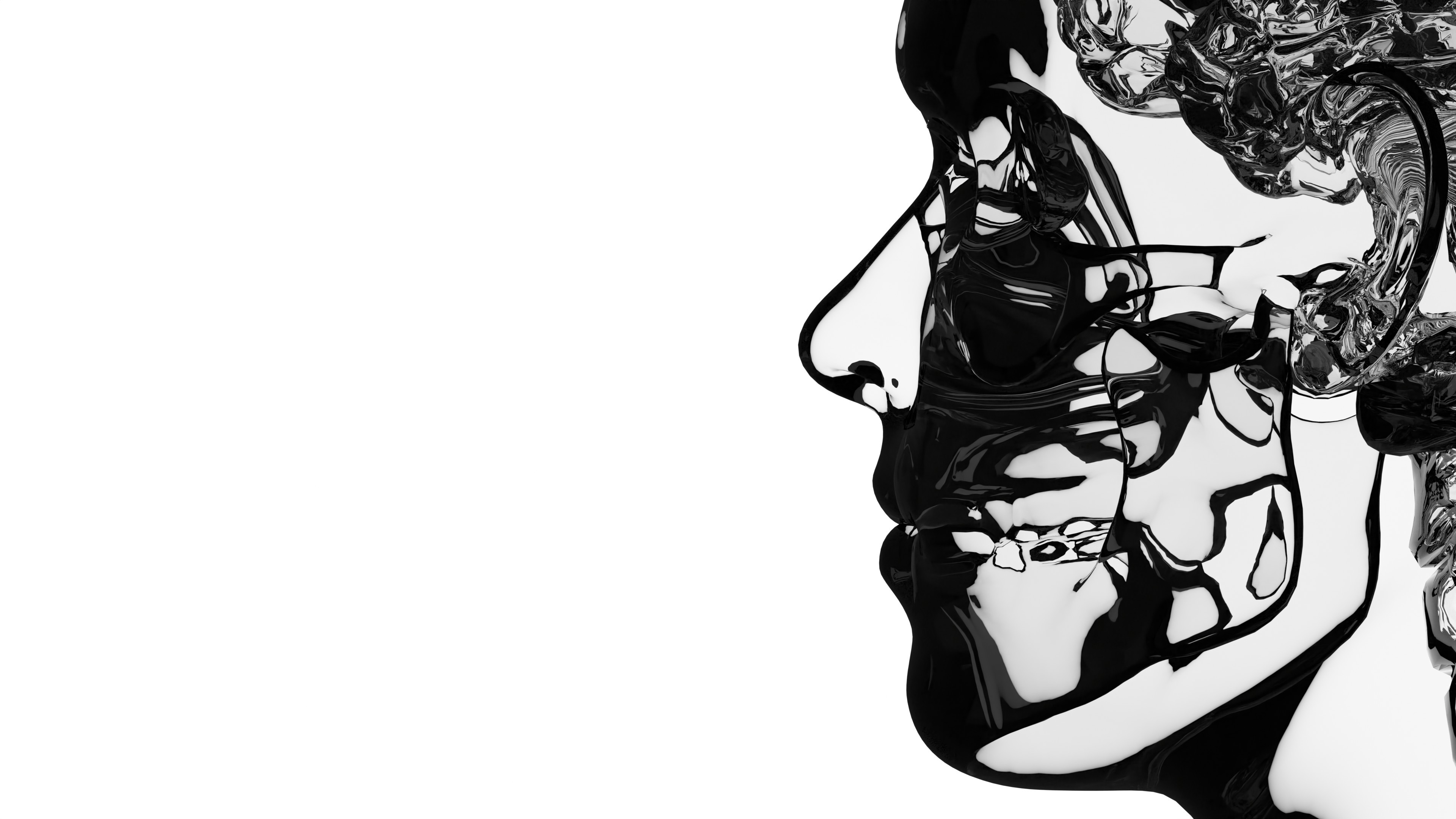
The glass mannequin embodies this reframing. Its lucidity refuses the phenomenological assumption of interiority. Its covered eyes refuse the premise that sight is the property of the seeing organ. The visor is not an obstruction, but a declaration: perception originates elsewhere.
The accompanying film extends the installation into a temporal realm, situating the object across three environments — a brutalist dystopian city rendered from the artist’s dream, a neutral exhibition space that reflects the installation’s actual site, and a black ocean beneath a pale gray sky. Each environment insists on physicality — concrete, water, gallery walls — while the installation destabilizes the conviction that consciousness resides within any of them.
Ripples in Mercury does not resolve the question it stages. It does not argue for the field theory of consciousness, nor does it argue against materialism. It builds a physical form and a moving image that propose a disturbance in the supposition that the answer must be located where humans have always looked for it.
If the tool is here, where is the observer?
DIRECTOR'S STATEMENT
RIPPLES IN MERCURY (2026)
SELECTED STILLS
The body is the mercury. The self is the ripple. The source is neither.
The Entropy Of Sin began with a single, corrosive question: what happens when intellect itself becomes the instrument of punishment? I use entropy as metaphor and structure - the slow diffusion of coherence into chaos - placing thought itself inside that process. The film is ordered around three conceptual sins - Obfuscation (concealment), Sophistry (deceptive reasoning), and Caedris (weaponised wisdom). These modes of thinking mutate into tools of power for those who pursue satisfaction rather than conscience.
Cinematically austere, the film plays in counterpoint: colour sequences present the protagonist’s lived subjectivity, while black-and-white passages embody the cult’s objective and judgemental perception. Alternating between archival 4:3 and widescreen 2.39:1 formats creates structural disequilibrium - depriving the spectator of a stable perspective and insisting they assemble the narrative puzzle. Recurring motifs - Polaroids, the gnarled tree, and the thorn eye emblem - serve as evidence and accusation: always watching, always judging. Withholding names of the characters is an intentional tool that dissolves biographical specificity into anonymity - the mechanism that transforms private transgression from anecdote to structure.
Ambiguity is my method. Rather than tidy moral closure, the film refuses moral symmetry. The human mind is the apparatus of sin, however, entropy does not fall evenly. It insists that conscience - not ritual - delimits the violence a single human will permit.
© 2026 All rights reserved. nexxer films.
© 2026 All rights reserved. nexxer films.
NEXT —>
/
FULL FILM IN
DEVELOPMENT
/
NEXT —>
The infrastructure of the mind has been navigated for centuries. Reality as we perceive it is the brain’s interpretation of electrical signals received through the five senses — an act of translation which leads to inquiries around the true nature of reality. Despite a thorough understanding of how the cerebral apparatus functions, the site of consciousness — the locus where the corporeal experiences the world — is obscured. This absence is not a temporary gap in scientific knowledge. It is the persistent, foundational problem of philosophy of mind — an ontological question about the nature of experience.
Ripples in Mercury stages this absence in the form of a physical installation.
The title names the metaphor at the work’s center. Mercury — a metal that flows as fluid, a substance that reflects but cannot be held — behaves in defiance of the categories we impose on matter. Its ripples do not originate within the mercury itself; they appear when a signal from outside disturbs the surface.
Consciousness may operate similarly. It appears to be something the body contains, but it may only be the visible disturbance of a signal that arrives from elsewhere. The body is the mercury. The self is the ripple. The source is neither.
The installation imagines the human consciousness condensed inside a headset: a localized instrument suspended within a field larger than the limits of its own perception.
The work draws on the philosophical proposition, present in Western thought since the late nineteenth century and reactivated in contemporary consciousness studies, that the brain may function not as the producer of experience but as its receiver.
Under this framework, the body operates as an instrument — an interface between sensory input and a broader field where perception actually occurs. The retina gathers and the nerves transmit the signals. The felt quality of perception does not reside in the corporeal apparatus but in a site the body has never reached. It does not necessarily establish the position of the observer.
The glass mannequin embodies this reframing. Its lucidity refuses the phenomenological assumption of interiority. Its covered eyes refuse the premise that sight is the property of the seeing organ. The visor is not an obstruction, but a declaration: perception originates elsewhere.
The accompanying film extends the installation into a temporal realm, situating the object across three environments — a brutalist dystopian city rendered from the artist’s dream, a neutral exhibition space that reflects the installation’s actual site, and a black ocean beneath a pale gray sky. Each environment insists on physicality — concrete, water, gallery walls — while the installation destabilizes the conviction that consciousness resides within any of them.
Ripples in Mercury does not resolve the question it stages. It does not argue for the field theory of consciousness, nor does it argue against materialism. It builds a physical form and a moving image that propose a disturbance in the supposition that the answer must be located where humans have always looked for it.
If the tool is here, where is the observer?
An installation and film investigating whether consciousness is produced by the body or received from beyond it.
RIPPLES IN MERCURY (2026)
01
MANAN GOYAL
An installation and film investigating whether consciousness is produced by the body or received from beyond it.
CONCEPT, DIRECTION, 3D ARTISTRY
BY MANAN GOYAL
DIRECTOR'S STATEMENT
The body is the mercury. The self is the ripple. The source is neither.
SELECTED STILLS
The infrastructure of the mind has been navigated for centuries. Reality as we perceive it is the brain’s interpretation of electrical signals received through the five senses — an act of translation which leads to inquiries around the true nature of reality. Despite a thorough understanding of how the cerebral apparatus functions, the site of consciousness — the locus where the corporeal experiences the world — is obscured. This absence is not a temporary gap in scientific knowledge. It is the persistent, foundational problem of philosophy of mind — an ontological question about the nature of experience.
Ripples in Mercury stages this absence in the form of a physical installation.
The title names the metaphor at the work’s center. Mercury — a metal that flows as fluid, a substance that reflects but cannot be held — behaves in defiance of the categories we impose on matter. Its ripples do not originate within the mercury itself; they appear when a signal from outside disturbs the surface.
Consciousness may operate similarly. It appears to be something the body contains, but it may only be the visible disturbance of a signal that arrives from elsewhere. The body is the mercury. The self is the ripple. The source is neither.
The installation imagines the human consciousness condensed inside a headset: a localized instrument suspended within a field larger than the limits of its own perception.
The work draws on the philosophical proposition, present in Western thought since the late nineteenth century and reactivated in contemporary consciousness studies, that the brain may function not as the producer of experience but as its receiver.
Under this framework, the body operates as an instrument — an interface between sensory input and a broader field where perception actually occurs. The retina gathers and the nerves transmit the signals. The felt quality of perception does not reside in the corporeal apparatus but in a site the body has never reached. It does not necessarily establish the position of the observer.
The glass mannequin embodies this reframing. Its lucidity refuses the phenomenological assumption of interiority. Its covered eyes refuse the premise that sight is the property of the seeing organ. The visor is not an obstruction, but a declaration: perception originates elsewhere.
The accompanying film extends the installation into a temporal realm, situating the object across three environments — a brutalist dystopian city rendered from the artist’s dream, a neutral exhibition space that reflects the installation’s actual site, and a black ocean beneath a pale gray sky. Each environment insists on physicality — concrete, water, gallery walls — while the installation destabilizes the conviction that consciousness resides within any of them.
Ripples in Mercury does not resolve the question it stages. It does not argue for the field theory of consciousness, nor does it argue against materialism. It builds a physical form and a moving image that propose a disturbance in the supposition that the answer must be located where humans have always looked for it.
If the tool is here, where is the observer?
DIRECTOR'S STATEMENT
RIPPLES IN MERCURY (2026)
SELECTED STILLS
The body is the mercury. The self is the ripple. The source is neither.
The Entropy Of Sin began with a single, corrosive question: what happens when intellect itself becomes the instrument of punishment? I use entropy as metaphor and structure - the slow diffusion of coherence into chaos - placing thought itself inside that process. The film is ordered around three conceptual sins - Obfuscation (concealment), Sophistry (deceptive reasoning), and Caedris (weaponised wisdom). These modes of thinking mutate into tools of power for those who pursue satisfaction rather than conscience.
Cinematically austere, the film plays in counterpoint: colour sequences present the protagonist’s lived subjectivity, while black-and-white passages embody the cult’s objective and judgemental perception. Alternating between archival 4:3 and widescreen 2.39:1 formats creates structural disequilibrium - depriving the spectator of a stable perspective and insisting they assemble the narrative puzzle. Recurring motifs - Polaroids, the gnarled tree, and the thorn eye emblem - serve as evidence and accusation: always watching, always judging. Withholding names of the characters is an intentional tool that dissolves biographical specificity into anonymity - the mechanism that transforms private transgression from anecdote to structure.
Ambiguity is my method. Rather than tidy moral closure, the film refuses moral symmetry. The human mind is the apparatus of sin, however, entropy does not fall evenly. It insists that conscience - not ritual - delimits the violence a single human will permit.
© 2026 All rights reserved. nexxer films.
NEXT —>
/
FULL FILM IN
DEVELOPMENT
/
NEXT —>
The infrastructure of the mind has been navigated for centuries. Reality as we perceive it is the brain’s interpretation of electrical signals received through the five senses — an act of translation which leads to inquiries around the true nature of reality. Despite a thorough understanding of how the cerebral apparatus functions, the site of consciousness — the locus where the corporeal experiences the world — is obscured. This absence is not a temporary gap in scientific knowledge. It is the persistent, foundational problem of philosophy of mind — an ontological question about the nature of experience.
Ripples in Mercury stages this absence in the form of a physical installation.
The title names the metaphor at the work’s center. Mercury — a metal that flows as fluid, a substance that reflects but cannot be held — behaves in defiance of the categories we impose on matter. Its ripples do not originate within the mercury itself; they appear when a signal from outside disturbs the surface.
Consciousness may operate similarly. It appears to be something the body contains, but it may only be the visible disturbance of a signal that arrives from elsewhere. The body is the mercury. The self is the ripple. The source is neither.
The installation imagines the human consciousness condensed inside a headset: a localized instrument suspended within a field larger than the limits of its own perception.
The work draws on the philosophical proposition, present in Western thought since the late nineteenth century and reactivated in contemporary consciousness studies, that the brain may function not as the producer of experience but as its receiver.
Under this framework, the body operates as an instrument — an interface between sensory input and a broader field where perception actually occurs. The retina gathers and the nerves transmit the signals. The felt quality of perception does not reside in the corporeal apparatus but in a site the body has never reached. It does not necessarily establish the position of the observer.
The glass mannequin embodies this reframing. Its lucidity refuses the phenomenological assumption of interiority. Its covered eyes refuse the premise that sight is the property of the seeing organ. The visor is not an obstruction, but a declaration: perception originates elsewhere.
The accompanying film extends the installation into a temporal realm, situating the object across three environments — a brutalist dystopian city rendered from the artist’s dream, a neutral exhibition space that reflects the installation’s actual site, and a black ocean beneath a pale gray sky. Each environment insists on physicality — concrete, water, gallery walls — while the installation destabilizes the conviction that consciousness resides within any of them.
Ripples in Mercury does not resolve the question it stages. It does not argue for the field theory of consciousness, nor does it argue against materialism. It builds a physical form and a moving image that propose a disturbance in the supposition that the answer must be located where humans have always looked for it.
If the tool is here, where is the observer?