STARRING
SWAR BAIRAGI
ORIGINAL SCORE BY
RUHAN JOSHI
CO-WRITTEN BY
DARSHIT AGRAWAL
WRITTEN, DIRECTED, AND PRODUCED
BY MANAN GOYAL
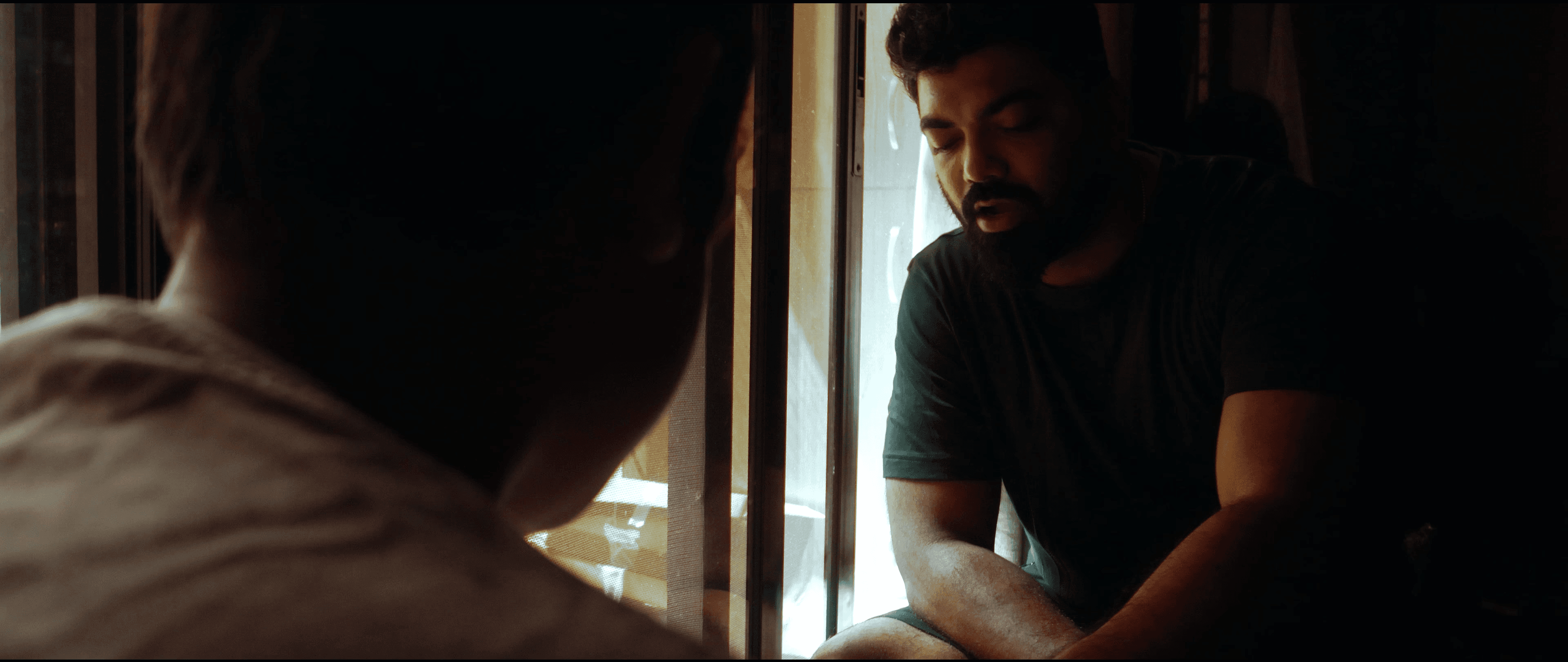

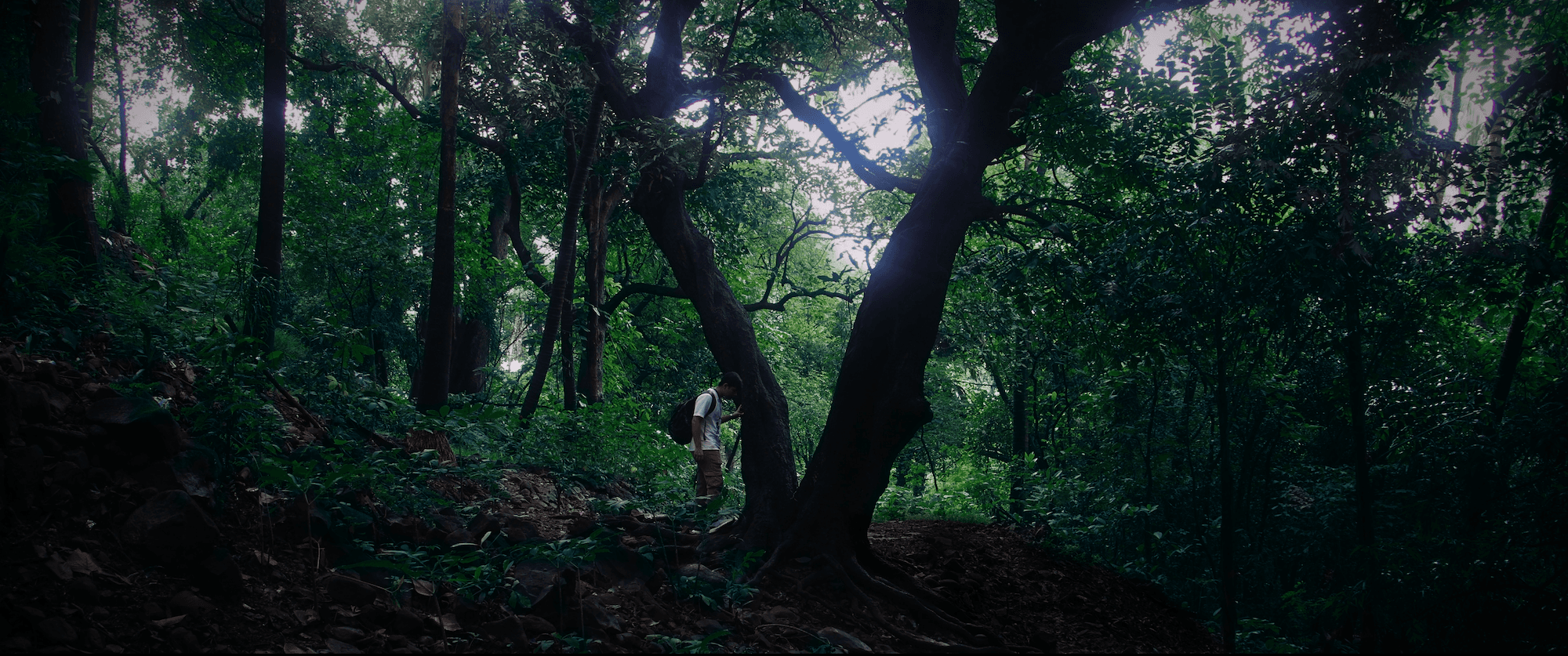


A young man is drawn into a secret order his father once served; whose doctrine of intellectual sins tests his conscience.
THE ENTROPY OF SIN (2025)
01
MANAN GOYAL
A young man is drawn into a secret order his father once served; whose doctrine of intellectual sins tests his conscience.
STARRING
SWAR BAIRAGI
WRITTEN, DIRECTED, AND PRODUCED
BY MANAN GOYAL
CO-WRITTEN BY
DARSHIT AGRAWAL
ORIGINAL SCORE BY
RUHAN JOSHI
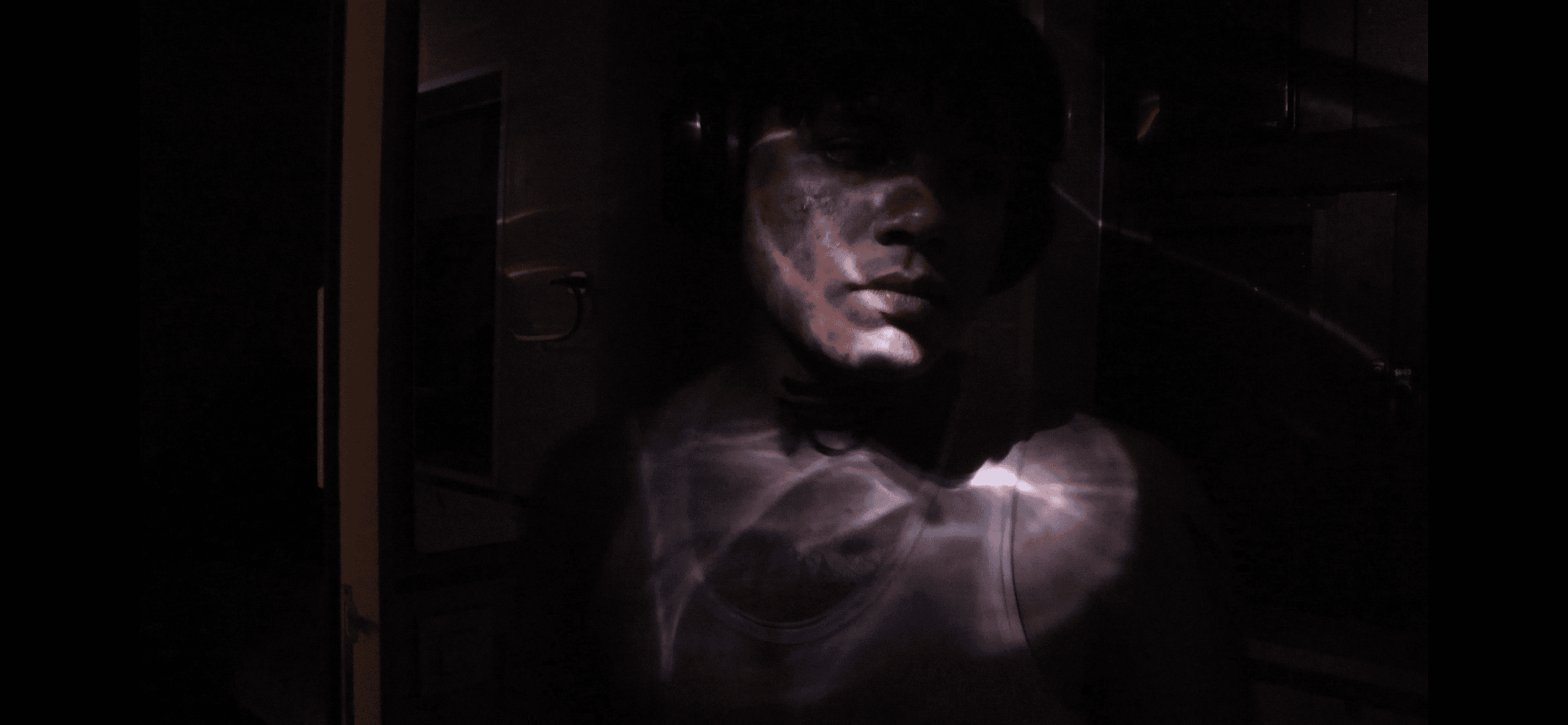
Portrayed in counterpoint, color aligns with lived subjectivity, while black-and-white reflect the cult’s dispassionate gaze.
SELECTED STILLS
The Entropy Of Sin began with a single, corrosive question: what happens when intellect itself becomes the instrument of punishment? I use entropy as metaphor and structure - the slow diffusion of coherence into chaos - placing thought itself inside that process. The film is ordered around three conceptual sins - Obfuscation (concealment), Sophistry (deceptive reasoning), and Caedris (weaponised wisdom). These modes of thinking mutate into tools of power for those who pursue satisfaction rather than conscience.
Cinematically austere, the film plays in counterpoint: colour sequences present the protagonist’s lived subjectivity, while black-and-white passages embody the cult’s objective and judgemental perception. Alternating between archival 4:3 and widescreen 2.39:1 formats creates structural disequilibrium - depriving the spectator of a stable perspective and insisting they assemble the narrative puzzle. Recurring motifs - Polaroids, the gnarled tree, and the thorn eye emblem - serve as evidence and accusation: always watching, always judging. Withholding names of the characters is an intentional tool that dissolves biographical specificity into anonymity - the mechanism that transforms private transgression from anecdote to structure.
Ambiguity is my method. Rather than tidy moral closure, the film refuses moral symmetry. The human mind is the apparatus of sin, however, entropy does not fall evenly. It insists that conscience - not ritual - delimits the violence a single human will permit.
DIRECTOR'S STATEMENT
THE ENTROPY OF SIN (2025)
SELECTED STILLS
Portrayed in counterpoint, color aligns with lived subjectivity, while black-and-white reflect the cult’s dispassionate gaze.
DIRECTOR'S STATEMENT
The Entropy Of Sin began with a single, corrosive question: what happens when intellect itself becomes the instrument of punishment? I use entropy as metaphor and structure - the slow diffusion of coherence into chaos - placing thought itself inside that process. The film is ordered around three conceptual sins - Obfuscation (concealment), Sophistry (deceptive reasoning), and Caedris (weaponised wisdom). These modes of thinking mutate into tools of power for those who pursue satisfaction rather than conscience.
Cinematically austere, the film plays in counterpoint: colour sequences present the protagonist’s lived subjectivity, while black-and-white passages embody the cult’s objective and judgemental perception. Alternating between archival 4:3 and widescreen 2.39:1 formats creates structural disequilibrium - depriving the spectator of a stable perspective and insisting they assemble the narrative puzzle. Recurring motifs - Polaroids, the gnarled tree, and the thorn eye emblem - serve as evidence and accusation: always watching, always judging. Withholding names of the characters is an intentional tool that dissolves biographical specificity into anonymity - the mechanism that transforms private transgression from anecdote to structure.
Ambiguity is my method. Rather than tidy moral closure, the film refuses moral symmetry. The human mind is the apparatus of sin, however, entropy does not fall evenly. It insists that conscience - not ritual - delimits the violence a single human will permit.
© 2026 All rights reserved. nexxer films.
SELECTED STILLS
Portrayed in counterpoint, color aligns with lived subjectivity, while black-and-white reflect the cult’s dispassionate gaze.
MANAN GOYAL
A young man is drawn into a secret order his father once served; whose doctrine of intellectual sins tests his conscience.
The Entropy Of Sin began with a single, corrosive question: what happens when intellect itself becomes the instrument of punishment? I use entropy as metaphor and structure - the slow diffusion of coherence into chaos - placing thought itself inside that process. The film is ordered around three conceptual sins - Obfuscation (concealment), Sophistry (deceptive reasoning), and Caedris (weaponised wisdom). These modes of thinking mutate into tools of power for those who pursue satisfaction rather than conscience.
Cinematically austere, the film plays in counterpoint: colour sequences present the protagonist’s lived subjectivity, while black-and-white passages embody the cult’s objective and judgemental perception. Alternating between archival 4:3 and widescreen 2.39:1 formats creates structural disequilibrium - depriving the spectator of a stable perspective and insisting they assemble the narrative puzzle. Recurring motifs - Polaroids, the gnarled tree, and the thorn eye emblem - serve as evidence and accusation: always watching, always judging. Withholding names of the characters is an intentional tool that dissolves biographical specificity into anonymity - the mechanism that transforms private transgression from anecdote to structure.
Ambiguity is my method. Rather than tidy moral closure, the film refuses moral symmetry. The human mind is the apparatus of sin, however, entropy does not fall evenly. It insists that conscience - not ritual - delimits the violence a single human will permit.
© 2026 All rights reserved. nexxer films.
DIRECTOR'S STATEMENT
THE ENTROPY OF SIN (2025)
01
A young man is drawn into a secret order his father once served; whose doctrine of intellectual sins tests his conscience.
THE ENTROPY OF SIN (2025)
01
MANAN GOYAL
A young man is drawn into a secret order his father once served; whose doctrine of intellectual sins tests his conscience.
STARRING
SWAR BAIRAGI
WRITTEN, DIRECTED, AND PRODUCED
BY MANAN GOYAL
CO-WRITTEN BY
DARSHIT AGRAWAL
ORIGINAL SCORE BY
RUHAN JOSHI
Portrayed in counterpoint, color aligns with lived subjectivity, while black-and-white reflect the cult’s dispassionate gaze.
SELECTED STILLS
The Entropy Of Sin began with a single, corrosive question: what happens when intellect itself becomes the instrument of punishment? I use entropy as metaphor and structure - the slow diffusion of coherence into chaos - placing thought itself inside that process. The film is ordered around three conceptual sins - Obfuscation (concealment), Sophistry (deceptive reasoning), and Caedris (weaponised wisdom). These modes of thinking mutate into tools of power for those who pursue satisfaction rather than conscience.
Cinematically austere, the film plays in counterpoint: colour sequences present the protagonist’s lived subjectivity, while black-and-white passages embody the cult’s objective and judgemental perception. Alternating between archival 4:3 and widescreen 2.39:1 formats creates structural disequilibrium - depriving the spectator of a stable perspective and insisting they assemble the narrative puzzle. Recurring motifs - Polaroids, the gnarled tree, and the thorn eye emblem - serve as evidence and accusation: always watching, always judging. Withholding names of the characters is an intentional tool that dissolves biographical specificity into anonymity - the mechanism that transforms private transgression from anecdote to structure.
Ambiguity is my method. Rather than tidy moral closure, the film refuses moral symmetry. The human mind is the apparatus of sin, however, entropy does not fall evenly. It insists that conscience - not ritual - delimits the violence a single human will permit.
DIRECTOR'S STATEMENT
THE ENTROPY OF SIN (2025)
SELECTED STILLS
Portrayed in counterpoint, color aligns with lived subjectivity, while black-and-white reflect the cult’s dispassionate gaze.
DIRECTOR'S STATEMENT
The Entropy Of Sin began with a single, corrosive question: what happens when intellect itself becomes the instrument of punishment? I use entropy as metaphor and structure - the slow diffusion of coherence into chaos - placing thought itself inside that process. The film is ordered around three conceptual sins - Obfuscation (concealment), Sophistry (deceptive reasoning), and Caedris (weaponised wisdom). These modes of thinking mutate into tools of power for those who pursue satisfaction rather than conscience.
Cinematically austere, the film plays in counterpoint: colour sequences present the protagonist’s lived subjectivity, while black-and-white passages embody the cult’s objective and judgemental perception. Alternating between archival 4:3 and widescreen 2.39:1 formats creates structural disequilibrium - depriving the spectator of a stable perspective and insisting they assemble the narrative puzzle. Recurring motifs - Polaroids, the gnarled tree, and the thorn eye emblem - serve as evidence and accusation: always watching, always judging. Withholding names of the characters is an intentional tool that dissolves biographical specificity into anonymity - the mechanism that transforms private transgression from anecdote to structure.
Ambiguity is my method. Rather than tidy moral closure, the film refuses moral symmetry. The human mind is the apparatus of sin, however, entropy does not fall evenly. It insists that conscience - not ritual - delimits the violence a single human will permit.
© 2026 All rights reserved. nexxer films.
SELECTED STILLS
Portrayed in counterpoint, color aligns with lived subjectivity, while black-and-white reflect the cult’s dispassionate gaze.
MANAN GOYAL
A young man is drawn into a secret order his father once served; whose doctrine of intellectual sins tests his conscience.
The Entropy Of Sin began with a single, corrosive question: what happens when intellect itself becomes the instrument of punishment? I use entropy as metaphor and structure - the slow diffusion of coherence into chaos - placing thought itself inside that process. The film is ordered around three conceptual sins - Obfuscation (concealment), Sophistry (deceptive reasoning), and Caedris (weaponised wisdom). These modes of thinking mutate into tools of power for those who pursue satisfaction rather than conscience.
Cinematically austere, the film plays in counterpoint: colour sequences present the protagonist’s lived subjectivity, while black-and-white passages embody the cult’s objective and judgemental perception. Alternating between archival 4:3 and widescreen 2.39:1 formats creates structural disequilibrium - depriving the spectator of a stable perspective and insisting they assemble the narrative puzzle. Recurring motifs - Polaroids, the gnarled tree, and the thorn eye emblem - serve as evidence and accusation: always watching, always judging. Withholding names of the characters is an intentional tool that dissolves biographical specificity into anonymity - the mechanism that transforms private transgression from anecdote to structure.
Ambiguity is my method. Rather than tidy moral closure, the film refuses moral symmetry. The human mind is the apparatus of sin, however, entropy does not fall evenly. It insists that conscience - not ritual - delimits the violence a single human will permit.
© 2026 All rights reserved. nexxer films.
DIRECTOR'S STATEMENT
THE ENTROPY OF SIN (2025)
01
A young man is drawn into a secret order his father once served; whose doctrine of intellectual sins tests his conscience.
THE ENTROPY OF SIN (2025)
01
MANAN GOYAL
A young man is drawn into a secret order his father once served; whose doctrine of intellectual sins tests his conscience.
STARRING
SWAR BAIRAGI
WRITTEN, DIRECTED, AND PRODUCED
BY MANAN GOYAL
CO-WRITTEN BY
DARSHIT AGRAWAL
ORIGINAL SCORE BY
RUHAN JOSHI
Portrayed in counterpoint, color aligns with lived subjectivity, while black-and-white reflect the cult’s dispassionate gaze.
SELECTED STILLS
The Entropy Of Sin began with a single, corrosive question: what happens when intellect itself becomes the instrument of punishment? I use entropy as metaphor and structure - the slow diffusion of coherence into chaos - placing thought itself inside that process. The film is ordered around three conceptual sins - Obfuscation (concealment), Sophistry (deceptive reasoning), and Caedris (weaponised wisdom). These modes of thinking mutate into tools of power for those who pursue satisfaction rather than conscience.
Cinematically austere, the film plays in counterpoint: colour sequences present the protagonist’s lived subjectivity, while black-and-white passages embody the cult’s objective and judgemental perception. Alternating between archival 4:3 and widescreen 2.39:1 formats creates structural disequilibrium - depriving the spectator of a stable perspective and insisting they assemble the narrative puzzle. Recurring motifs - Polaroids, the gnarled tree, and the thorn eye emblem - serve as evidence and accusation: always watching, always judging. Withholding names of the characters is an intentional tool that dissolves biographical specificity into anonymity - the mechanism that transforms private transgression from anecdote to structure.
Ambiguity is my method. Rather than tidy moral closure, the film refuses moral symmetry. The human mind is the apparatus of sin, however, entropy does not fall evenly. It insists that conscience - not ritual - delimits the violence a single human will permit.
DIRECTOR'S STATEMENT
THE ENTROPY OF SIN (2025)
SELECTED STILLS
Portrayed in counterpoint, color aligns with lived subjectivity, while black-and-white reflect the cult’s dispassionate gaze.
DIRECTOR'S STATEMENT
The Entropy Of Sin began with a single, corrosive question: what happens when intellect itself becomes the instrument of punishment? I use entropy as metaphor and structure - the slow diffusion of coherence into chaos - placing thought itself inside that process. The film is ordered around three conceptual sins - Obfuscation (concealment), Sophistry (deceptive reasoning), and Caedris (weaponised wisdom). These modes of thinking mutate into tools of power for those who pursue satisfaction rather than conscience.
Cinematically austere, the film plays in counterpoint: colour sequences present the protagonist’s lived subjectivity, while black-and-white passages embody the cult’s objective and judgemental perception. Alternating between archival 4:3 and widescreen 2.39:1 formats creates structural disequilibrium - depriving the spectator of a stable perspective and insisting they assemble the narrative puzzle. Recurring motifs - Polaroids, the gnarled tree, and the thorn eye emblem - serve as evidence and accusation: always watching, always judging. Withholding names of the characters is an intentional tool that dissolves biographical specificity into anonymity - the mechanism that transforms private transgression from anecdote to structure.
Ambiguity is my method. Rather than tidy moral closure, the film refuses moral symmetry. The human mind is the apparatus of sin, however, entropy does not fall evenly. It insists that conscience - not ritual - delimits the violence a single human will permit.
© 2026 All rights reserved. nexxer films.
SELECTED STILLS
Portrayed in counterpoint, color aligns with lived subjectivity, while black-and-white reflect the cult’s dispassionate gaze.
MANAN GOYAL
A young man is drawn into a secret order his father once served; whose doctrine of intellectual sins tests his conscience.
The Entropy Of Sin began with a single, corrosive question: what happens when intellect itself becomes the instrument of punishment? I use entropy as metaphor and structure - the slow diffusion of coherence into chaos - placing thought itself inside that process. The film is ordered around three conceptual sins - Obfuscation (concealment), Sophistry (deceptive reasoning), and Caedris (weaponised wisdom). These modes of thinking mutate into tools of power for those who pursue satisfaction rather than conscience.
Cinematically austere, the film plays in counterpoint: colour sequences present the protagonist’s lived subjectivity, while black-and-white passages embody the cult’s objective and judgemental perception. Alternating between archival 4:3 and widescreen 2.39:1 formats creates structural disequilibrium - depriving the spectator of a stable perspective and insisting they assemble the narrative puzzle. Recurring motifs - Polaroids, the gnarled tree, and the thorn eye emblem - serve as evidence and accusation: always watching, always judging. Withholding names of the characters is an intentional tool that dissolves biographical specificity into anonymity - the mechanism that transforms private transgression from anecdote to structure.
Ambiguity is my method. Rather than tidy moral closure, the film refuses moral symmetry. The human mind is the apparatus of sin, however, entropy does not fall evenly. It insists that conscience - not ritual - delimits the violence a single human will permit.
© 2026 All rights reserved. nexxer films.
DIRECTOR'S STATEMENT
THE ENTROPY OF SIN (2025)
01